
20 min read
A Short History of Computing
From counting frames to programmable electronic machines — the ideas that led to today's computers.
Why Learn the History?
Every idea in a modern computer — stored programs, binary, punched input, the processor — was invented by someone trying to solve a real problem. Knowing the story helps the ideas make sense, and assignments often ask you to describe how computers developed.
Counting and Calculating by Hand
People have used tools to help with counting for thousands of years.
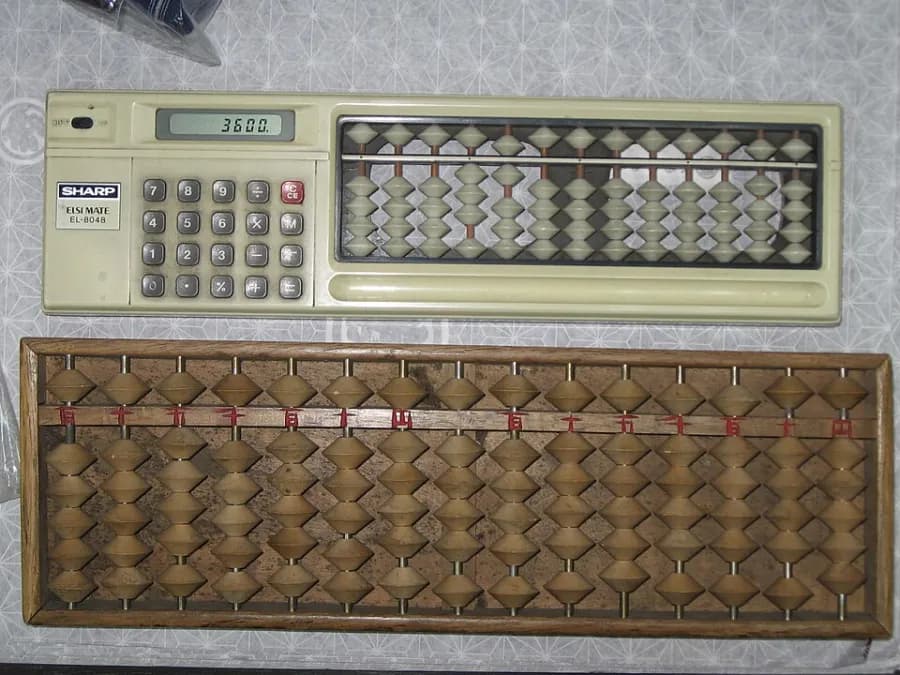
- The abacus — beads on rods. Each rod is a place value (ones, tens, hundreds). Versions are still used in parts of Asia to teach arithmetic.
- Napier's bones (1617) — numbered rods that turned multiplication into addition.
- The Pascaline (1642) — a mechanical adding machine with gear wheels, built by the French mathematician Blaise Pascal to help his father with tax sums.
- Jacquard's loom (1804) — a weaving machine controlled by punched cards. Holes in the card decided the pattern. This is an early example of a machine following stored instructions.
Babbage and Lovelace
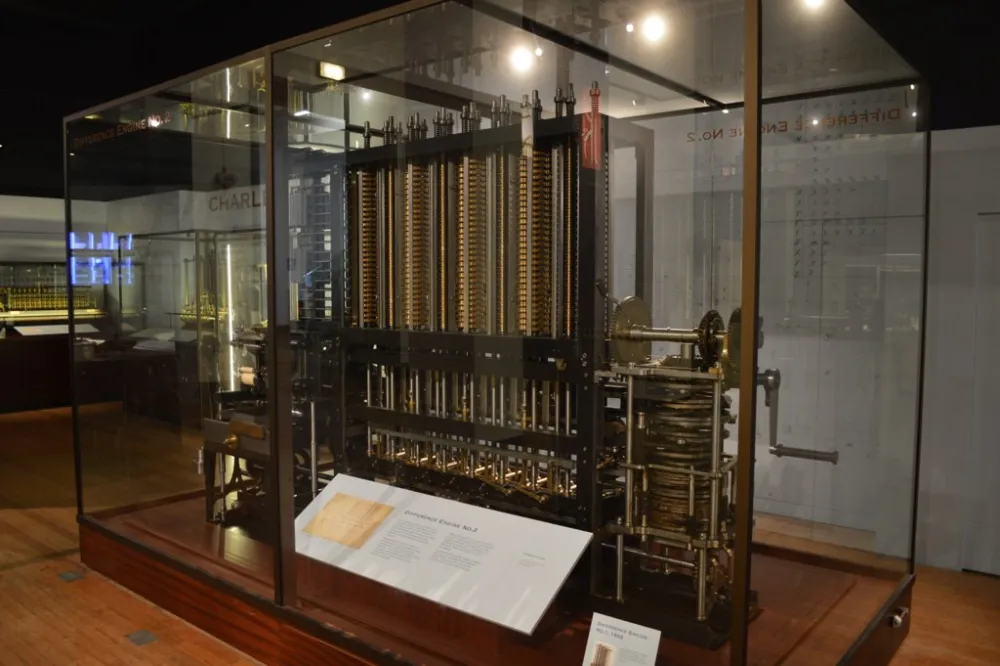
In the 1820s, the English mathematician Charles Babbage designed the Difference Engine, a huge mechanical calculator for printing accurate maths tables. He then designed a much more ambitious machine, the Analytical Engine (1837). It had:
- a "mill" to do the calculations — like a CPU,
- a "store" to hold numbers — like memory,
- punched cards for input, and a printer for output.
Babbage never finished it, but its plan matches the parts of a modern computer. That is why he is often called the "father of the computer".
Ada Lovelace, a mathematician who worked with Babbage, wrote notes in 1843 that included a step-by-step method for the engine to calculate a series of numbers. It is often described as the first computer program, and she saw that such machines could work with symbols and music, not just numbers.
From Punched Cards to Electronics
- Herman Hollerith (1890) built an electric tabulating machine that read punched cards to count the United States census. It cut years of work down to months. His company later became part of IBM.
- Alan Turing (1936) described a simple imaginary machine that could carry out any calculation that can be written as a set of steps. The idea — a general-purpose machine controlled by a program — is at the heart of computer science.
- Colossus (1944), built in Britain during the Second World War, was one of the first electronic digital computers. It used thousands of vacuum tubes (about 2,400 in the improved Mark 2) to help break encrypted German messages.
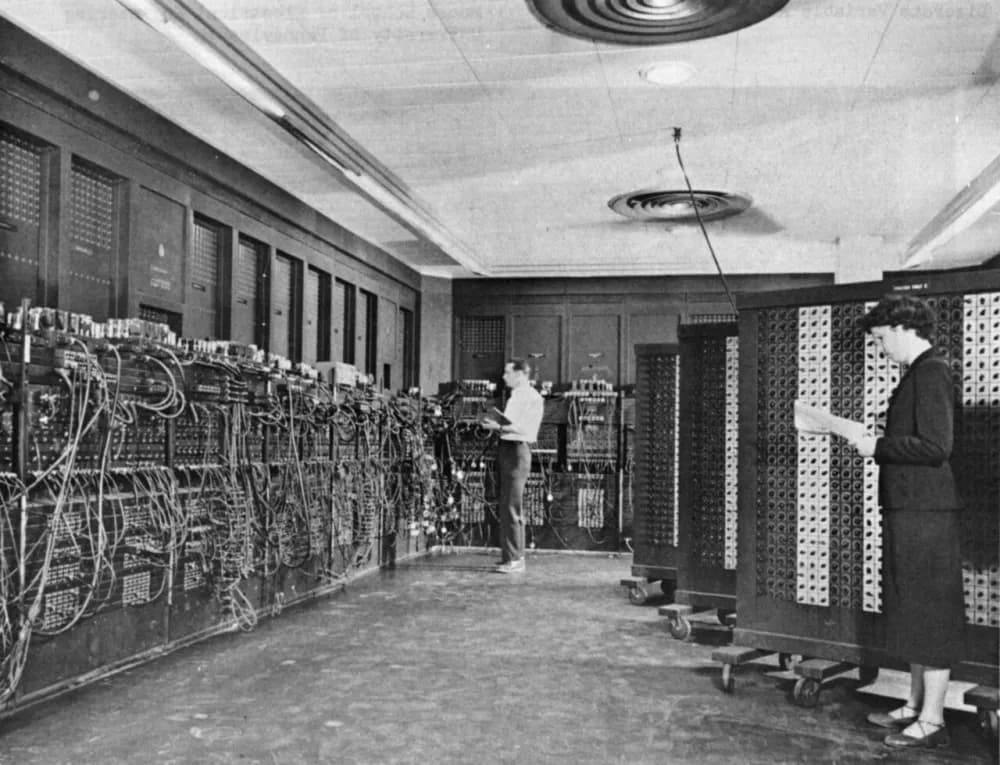
- ENIAC (1945), in the USA, was a general-purpose electronic computer. It filled a large room, weighed about 27 tonnes and used around 18,000 vacuum tubes. It was programmed by plugging cables and setting switches.
- The Manchester Baby (1948) was the first computer to run a program stored in its own electronic memory — the stored-program idea you met in the last lesson.
A Timeline to Remember
| Key dates in computing history | ||
|---|---|---|
Practice
More lessons in Introduction to Computer Systems · Next: The Five Generations of Computers · Previous: Basic Computer Architecture