
18 min read
Recap G — Accuracy and Precision
Reading target diagrams, accuracy and precision in measurements, and systematic and random errors — 12 worked examples, each with a diagram.
The Big Idea
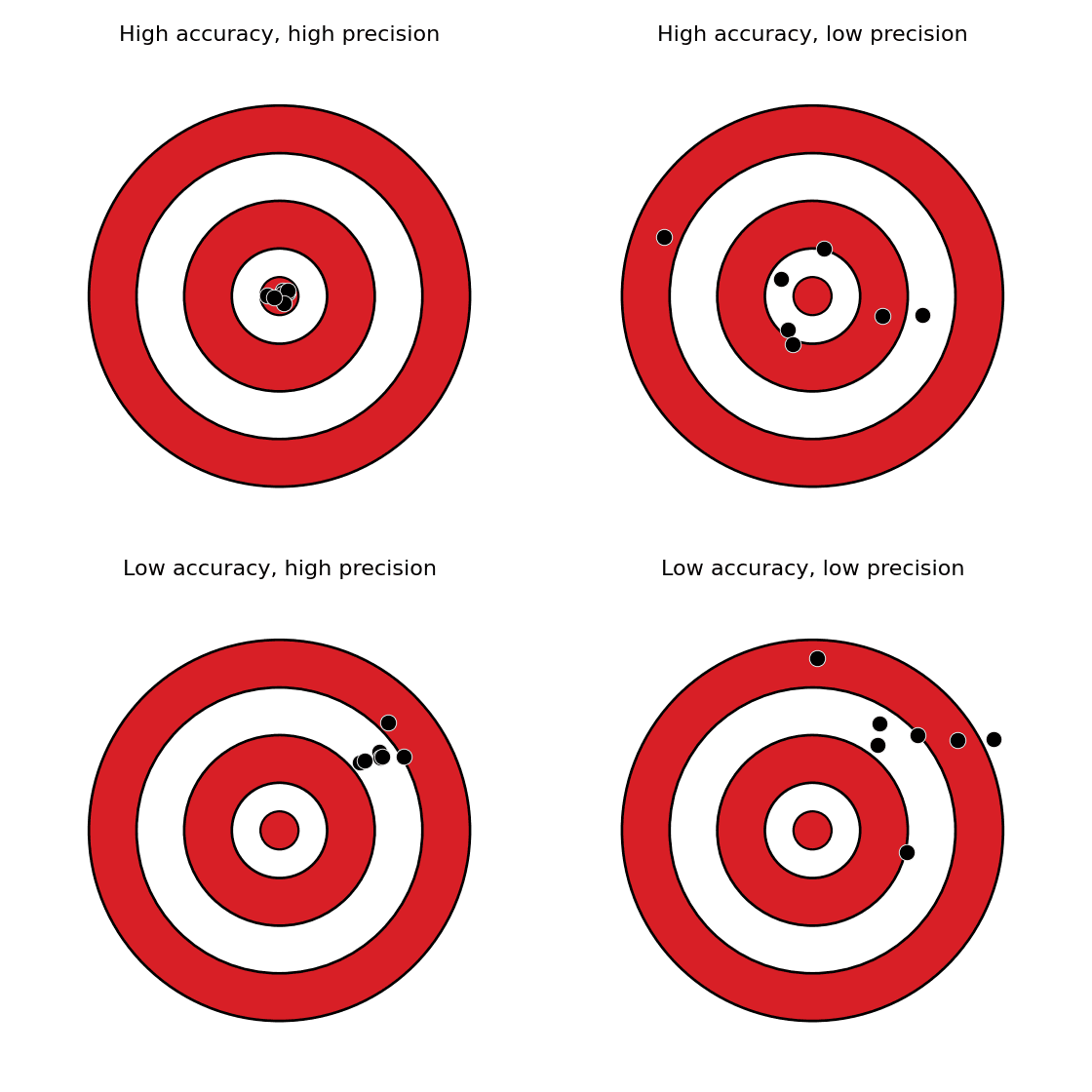
Imagine throwing darts at a target several times:
- Accuracy — how close your darts are to the bullseye (the correct value).
- Precision — how close your darts are to each other (how tight the group is).
They are different! You can be precise without being accurate, and accurate on average without being precise.
1. Reading Targets
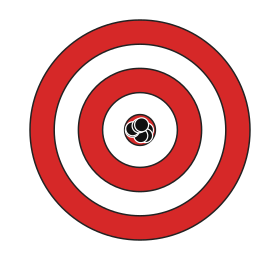
Example 1 — tight group on the bullseye
Question: All the shots are close together and on the bullseye. Describe the accuracy and precision.
Answer:
Close together → high precision. On the bullseye → high accuracy. High accuracy, high precision.

Example 1 — tight group away from the centre
Question: All the shots are in one tight group, but away from the bullseye. Describe the accuracy and precision.
Answer:
Close together → high precision. The group is not on the bullseye → low accuracy. Low accuracy, high precision.
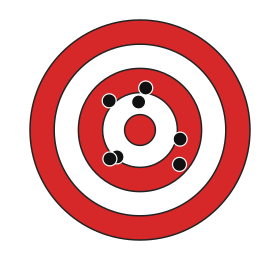
Example 1 — spread out around the centre
Question: The shots are spread out, but evenly around the bullseye. Describe the accuracy and precision.
Answer:
Not close together → low precision. The middle of the group is the bullseye → high accuracy. High accuracy, low precision.
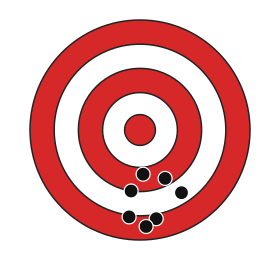
Example 1 — spread out and off-centre
Question: The shots are spread out and the group is away from the bullseye. Describe the accuracy and precision.
Answer:
Not close together → low precision. Not centred → low accuracy. Low accuracy, low precision.

Example 1 — another tight group
Question: Another target: a tight group in the outer ring. Describe the accuracy and precision.
Answer:
Tight → high precision; outer ring → low accuracy. Low accuracy, high precision. (The position of the group does not matter — only that it is not the centre.)
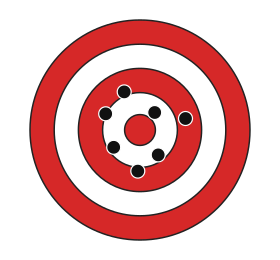
Example 1 — another spread
Question: Another target: shots in different rings all around the centre. Describe the accuracy and precision.
Answer:
Spread → low precision; centred → high accuracy. High accuracy, low precision.
2. Accuracy and Precision in Measurements
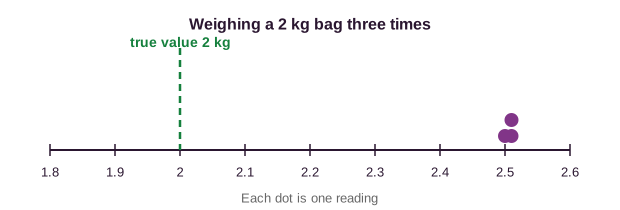
Example 1 — weighing a 2 kg bag three times
Question: A kg bag is weighed three times: , , kg. Describe the scale.
Answer:
The readings are very close together → precise. They are all about kg too heavy → not accurate. This is a systematic error — the scale probably needs to be set to zero.
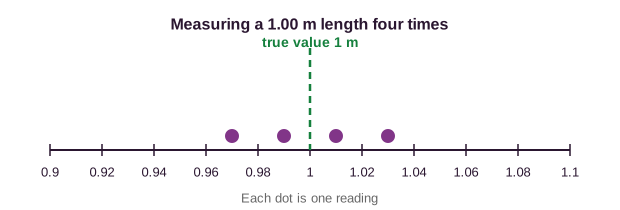
Example 1 — measuring a 1.00 m length four times
Question: A length is measured four times: , , , . Describe the measurements.
Answer:
The average is — the true value → accurate. But the readings are spread out → not very precise (random error).
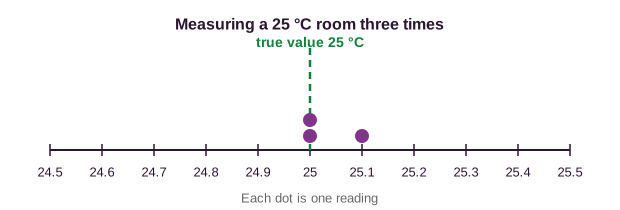
Example 1 — measuring a 25 °c room three times
Question: A thermometer in a °C room reads , , °C. Describe it.
Answer:
Close together and close to the true value → accurate and precise.
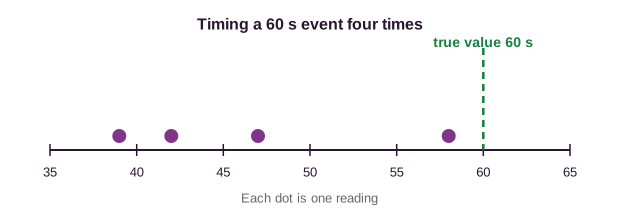
Example 1 — timing a 60 s event four times
Question: A s event is timed as , , , s. Describe the timings.
Answer:
Spread out → not precise. Average s, far from s → not accurate.
Example 2 — a clock that is fast
Question: A clock is always exactly minutes fast. Is it accurate? Is it precise?
Answer:
It is not accurate — it is always wrong by minutes. It is precise — it is wrong by exactly the same amount every time. This is a systematic error.
Example 3 — improving results
Question: How can you improve (a) precision and (b) accuracy?
Answer:
- (a) Precision: take careful, repeated readings and use a more precise instrument — this reduces random errors.
- (b) Accuracy: calibrate the instrument (for example zero the scale) and check it against a known standard — this removes systematic errors.
Your turn — try these on paper, then check the answers below.
. Shots are tightly grouped on the bullseye. Describe them.
. Darts land in all the rings, evenly around the bullseye. Describe them.
. What kind of error makes results spread out?
Example 1 — Answers to Your Turn
. High accuracy, high precision
. High accuracy, low precision
. Random errors
You have finished the recap. Now go to the Practice Paper.
More lessons in Recap and Practice · Next: Practice Paper · Previous: Recap F — Probability