
16 min read
Buses: Data, Address and Control
The three buses that carry values, locations and signals — and how bus width decides how much memory can be used.
What Is a Bus?
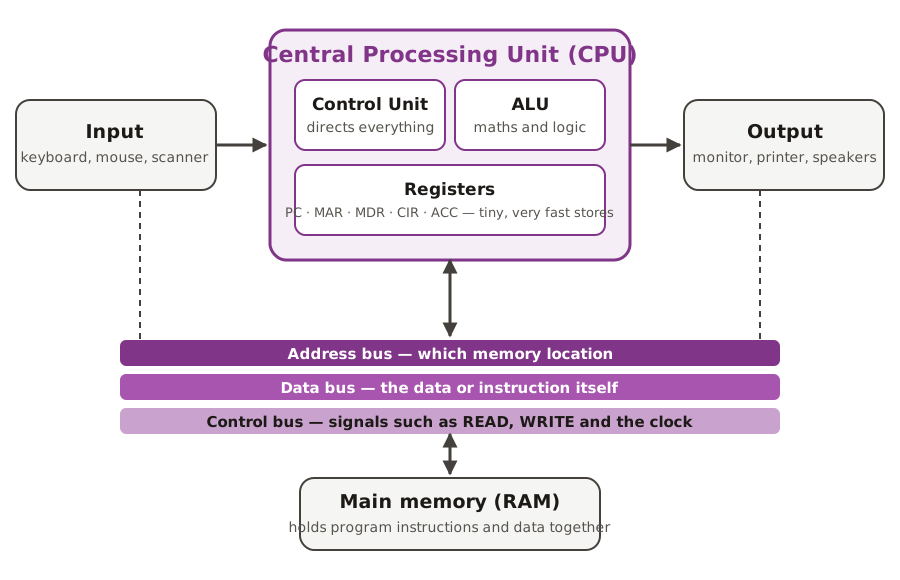
| The three buses | |||
|---|---|---|---|
Bus Width
The width of a bus is the number of wires in it — how many bits it carries at once.
- A wider data bus moves more data in each clock tick, so transfers are faster. A 64-bit data bus moves 8 bytes at a time; a 32-bit bus moves 4.
- A wider address bus can point to more memory locations. With n address lines, the CPU can address 2ⁿ locations.
Practice
A processor has a 12-bit address bus. How many memory locations can it address?
Your answer
More lessons in Computer Hardware and Peripherals · Next: The Fetch–Decode–Execute Cycle · Previous: The Microprocessor